

Skip to content
BizFay
  • Carrier Midea India logo

Founder track record · Air conditioners and home appliances, e-commerce

Carrier Midea: e-commerce SEO for a brand new D2C store, built from zero

A large air conditioner brand moving beyond marketplaces to its own online store, with SEO built from zero and quarterly traffic targets agreed and hit.

When
2022 to 2023
Scope
E-commerce SEO, technical SEO, keyword research, forecasting, client reporting
cmiestore.com
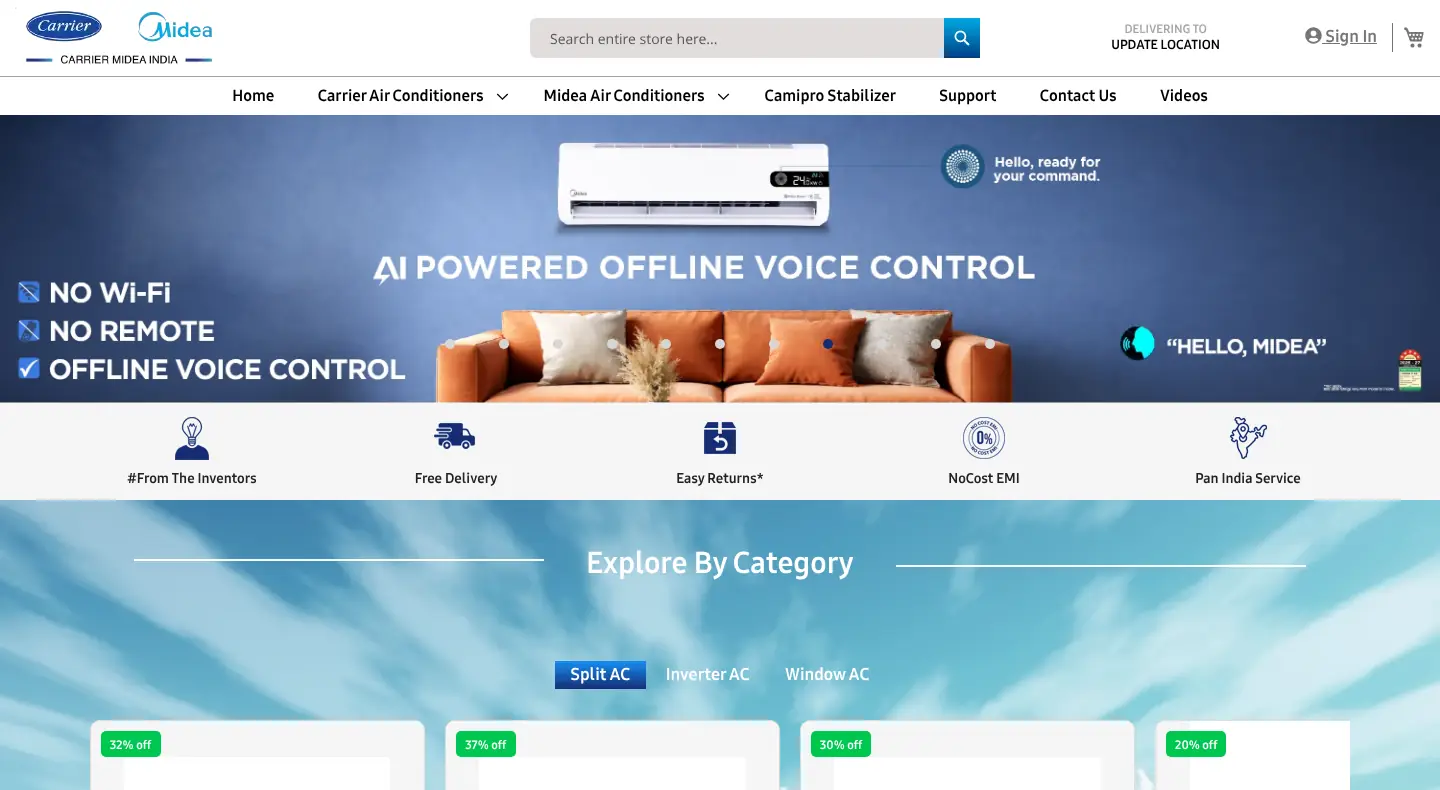
CMI Store home page by Carrier Midea India showing air conditioner offers on a desktop screen
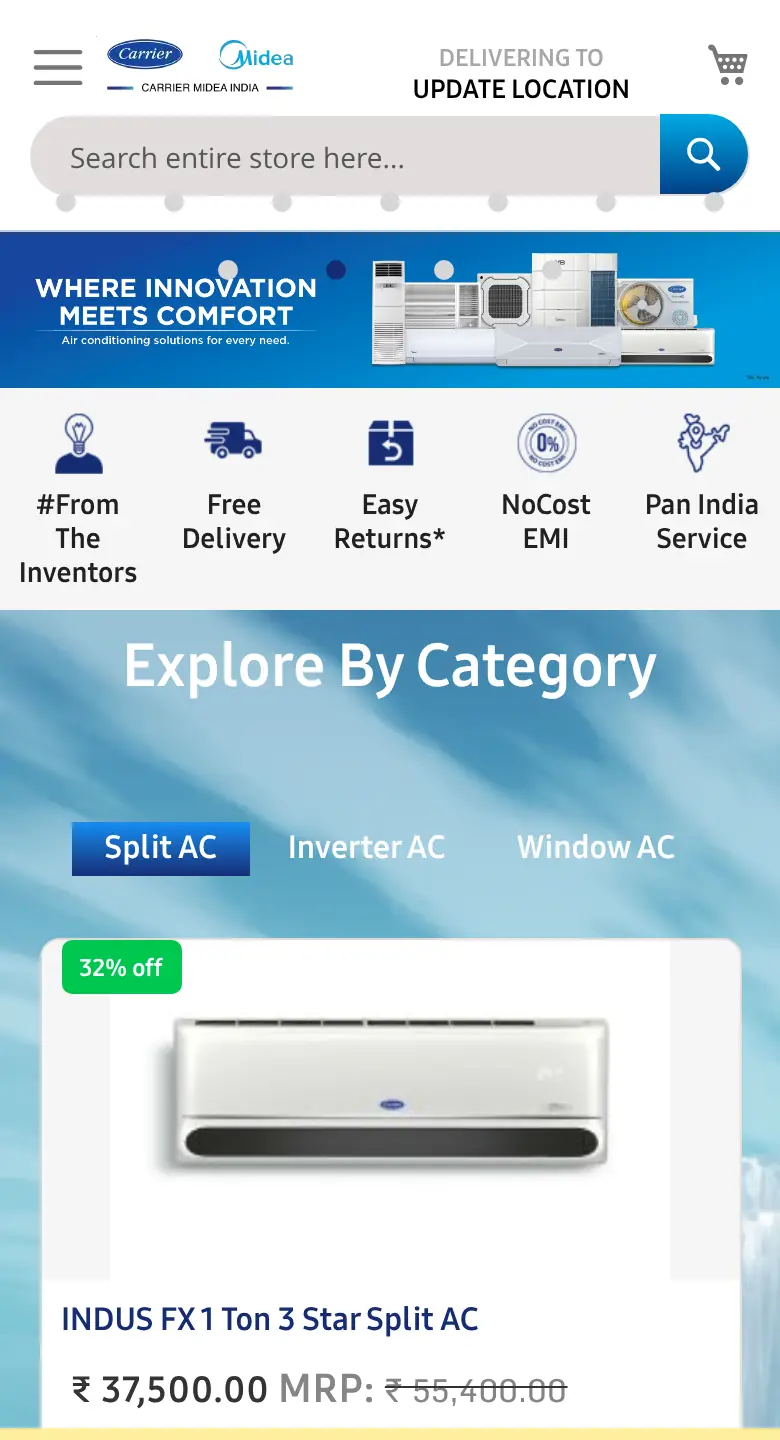
CMI Store mobile home page with Explore by Category and a split AC offer
CMI Store (cmiestore.com), Carrier Midea India's own online AC store, as it looks today. Captured 15 November 2026. BizFay did not design this website.

In short

Carrier Midea India sold mostly through Amazon and Flipkart. Our founder was one of the core team members who recommended its own D2C store, CMI Store, then built the store's SEO from zero, agreed quarterly traffic targets with the client, hit them every quarter, and fixed a crawl problem that was hiding the store's real pages from Google.

Where this work was done: Led by Ankit Kumar Sharma, BizFay's founder, as Assistant SEO Manager at a digital agency in India. BizFay did not exist yet, and we do not claim this client. It is the experience our founder brings to every BizFay engagement.

01

The business context

Carrier Midea India is the joint venture of Carrier and Midea that makes and sells both brands' air conditioners in India. Most of its online sales ran through Amazon and Flipkart, which meant less control over margins, customer data and how the brand was shown.

The agency recommended that the brand build its own store, CMI Store (cmiestore.com), and our founder was one of the core team members behind that recommendation. He was also part of the pitch that brought the account in.

02

The problem

A new store starts with no search history. At launch CMI Store ranked only when people searched for the brand name. Anyone searching for the product they wanted, such as a 1.5 ton inverter AC, found marketplaces and competitors instead.

As the catalogue grew, a second problem appeared. Filter and sort options on the store, which runs on Magento 2, were creating a huge number of near duplicate web addresses. Google was spending its time on those instead of on real category and product pages.

03

What the evidence showed

The audit showed the basics were missing: no XML sitemap, no robots.txt and no canonical tags, plus 15+ broken links, weak titles and slow mobile pages. Google showed about 11,800 results for the site, far more than the real pages it had.

From the filter options alone, a single category could create tens of thousands of address variations. More content would not help until Google could find the pages that mattered.

The client also needed to trust a channel that takes time. That called for a forecast, not a promise.

04

What was done

  • Built search demand into the store's structure

    Competitor research, keyword research and a site structure that matched how people shop for ACs: by type, tonnage, star rating and brand. A link building plan followed the structure.

  • Agreed quarterly targets in writing

    Quarterly organic traffic targets were agreed with the client, with a forecast of which non branded keywords should reach page one each quarter.

  • Fixed the crawl and indexing problem

    Canonical tags on filter and sort pages pointing to the main category, robots.txt rules for low value parameters, a clean XML sitemap with only real category and product pages, and internal linking changes. The site was backed up first and every rule was tested before going live.

  • Planned content at scale

    A content plan for the corporate site and the store, built on a 236 row keyword shortlist, so every category and product page had a clear search target.

  • Reported face to face

    Our founder visited the client to present strategy, the plan of action, technical issues, performance, bottlenecks and commercials to the client's point of contact.

05

The outcome

The agreed organic traffic target was hit every quarter. Across the agency's accounts, about 80% of quarterly ranking forecasts were achieved.

After the crawl fix, duplicate and 'crawled, currently not indexed' pages came down, Googlebot went back to crawling key pages, and impressions for key category pages began to recover.

The store moved from branded searches only to real non branded positions, such as a high intent 1.5 ton 5 star inverter AC search going from #30 to #3.

The numbers

What moved, and by how much.

Source: Founder's own project records: audit, keyword workbook and quarterly reports. Live site checks on 15 November 2026. The quote and commercial terms for this client are not published.

Ranking movement on buyer searches
Before After
  1. Carrier AC 1.5 ton 5 star inverter#30 #3
  2. carrier ac 2 ton#30 #6
  3. best window air conditionerNot ranking #3
  4. window air conditioner saleNot ranking #3
  5. best split ac brand in indiaNot ranking #6
  6. ac in indiaNot ranking #6
  7. carrier ac#7 #6
  8. carrier air conditioner#6 #5

Google position, top of the results on the left. From the project's keyword workbook. A sample of the keywords tracked.

What the first audit found
CheckFinding at audit
Results Google showed for the siteAbout 11,800
XML sitemapMissing
robots.txtMissing
Canonical tagsMissing on all pages
Broken links15+
Custom 404 pageMissing
Titles and descriptionsMany missing or weak

On the website today

What Carrier Midea's website looks like now.

Screens we captured on 15 November 2026. BizFay did not design these websites; they show the pages and features this case study talks about.

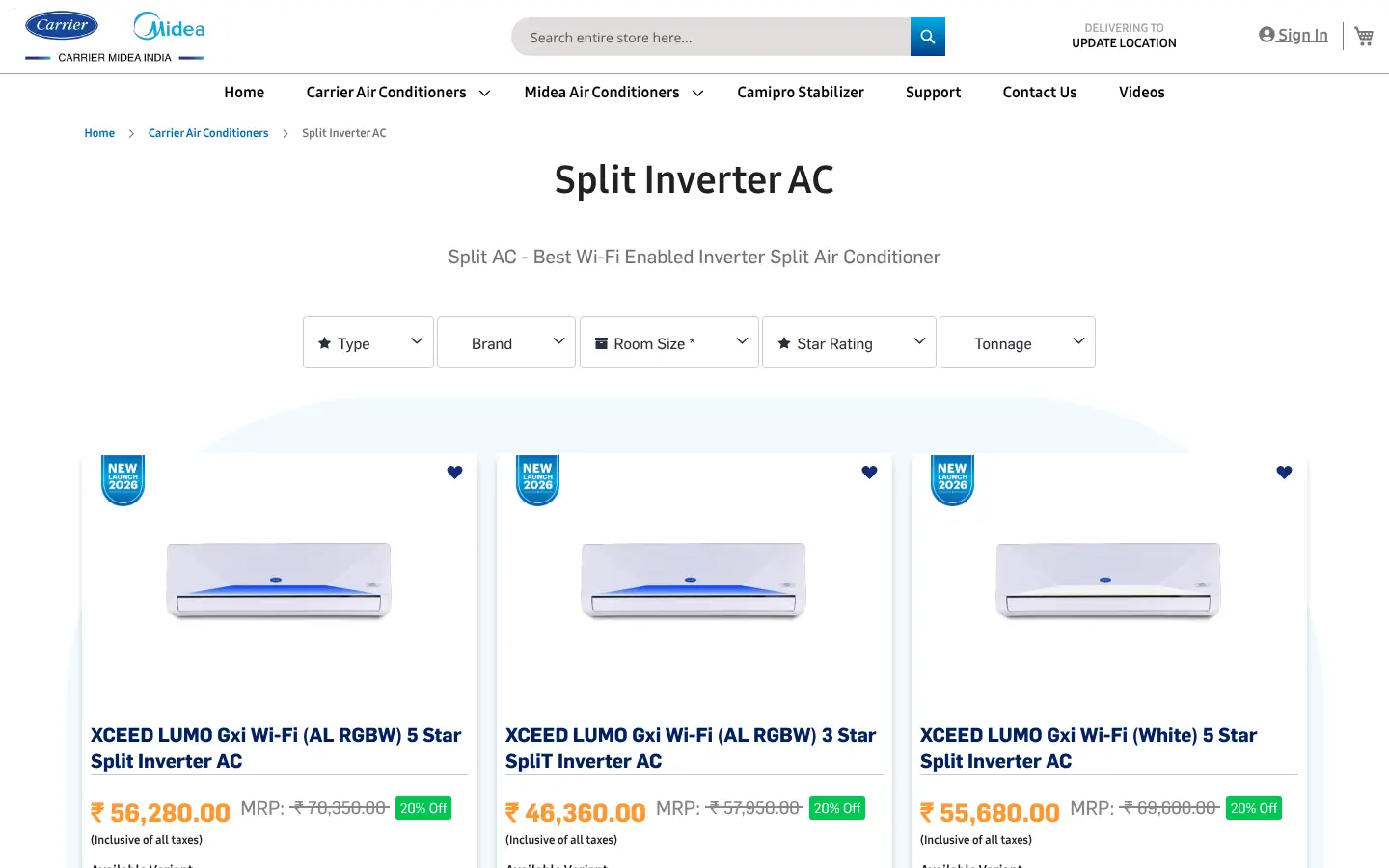
Carrier split inverter AC category page on CMI Store with filters for type, brand, room size, star rating and tonnage

The split inverter AC category. Each filter here can create a new web address, which is why canonical tags matter.

Desktop screenshot of the Carrier split inverter AC category on cmiestore.com captured 15 November 2026. The filter bar (type, brand, room size, star rating, tonnage) is the source of the filter address problem fixed in this project.

Going deeper

The thinking behind the work.

Why filters break e-commerce SEO

A category like split inverter ACs can be filtered by type, brand, room size, star rating and tonnage, then sorted by price or popularity. Each combination can create its own web address. On a live check of the store today, five filters alone allow roughly 674 combinations per category, and with sort, page size and view options that grows to tens of thousands of addresses.

Google treats each address as a page to crawl. When thousands of them show the same products, Google wastes its visits on copies and may skip the pages you actually want to rank. The fix is to tell Google which page is the real one (a canonical tag), keep low value parameters out of the crawl (robots.txt), and list only real pages in the sitemap.

Why a forecast mattered more than a promise

A brand moving off marketplaces is taking a risk. Marketplaces bring traffic on day one; your own store does not. Instead of promising 'page one', the agency agreed quarterly traffic targets and forecast which non branded keywords should reach page one each quarter.

That turned SEO into a plan the client could check every quarter, and it is why hitting the target every quarter mattered: it showed the channel was working before it was big.

Where it stands today

What we found when we checked in November 2026.

Public checks of the client's website and search data, done by us. They describe the site now, years after the project, and other teams have worked on it since.

Filter pages
Canonical to the clean category
A filtered and sorted split inverter AC page on cmiestore.com points its canonical tag to the clean category address, checked 15 November 2026.
XML sitemap
Live, 99 addresses
cmiestore.com/sitemap.xml lists 99 real pages, compared with about 11,800 results Google showed at the first audit.
Structured data
Breadcrumbs and FAQ
Category pages now carry BreadcrumbList and FAQPage structured data.
Domain Rating
33
Ahrefs Domain Rating, 0 to 100, checked 15 November 2026. It measures links today, not during the project.

What this means for you

Lessons you can use on your own business.

  • If you are moving off marketplaces, your own store starts with zero search visibility. Plan SEO before launch, not after.
  • Filters and sort options can quietly create thousands of duplicate pages. If Search Console shows far more pages than you actually have, that is the first thing to fix.
  • Ask for a forecast you can hold someone to, not a promise of 'page one'.

Free, no sales call

Selling on marketplaces and planning your own store?

Tell us about your catalogue. We will check whether your store can be crawled properly and which buyer searches it could realistically win first.

Related: Search and visibility, D2C marketing

Questions

About this case study.

No. Led by Ankit Kumar Sharma, BizFay's founder, as Assistant SEO Manager at a digital agency in India, before BizFay was founded. We show it because it is the experience BizFay is built on, and we say plainly where it was done.

Every filter and sort combination can create its own web address with almost the same products. Google then spends its crawl time on thousands of near copies instead of your real category and product pages. Canonical tags, robots.txt rules and a clean sitemap tell Google which pages matter.

A new store usually ranks only for its brand name at first. In this project, targets were agreed quarter by quarter, with a forecast of which non branded keywords should reach page one each quarter, so progress could be checked against a plan.

Magento is powerful but creates many filter and sort addresses by default. It needs canonical tags, careful robots.txt rules and a sitemap that only lists real pages. Once those are in place it ranks as well as any other platform.

Start with the right next step.

Tell us where your business is today and what you're trying to achieve. We'll first look at whether BizFay is the right fit and what the most useful next step may be.

See If We're a FitUnderstand How We Work

Free. About three minutes. A reply within two working days, with no sales call attached.